








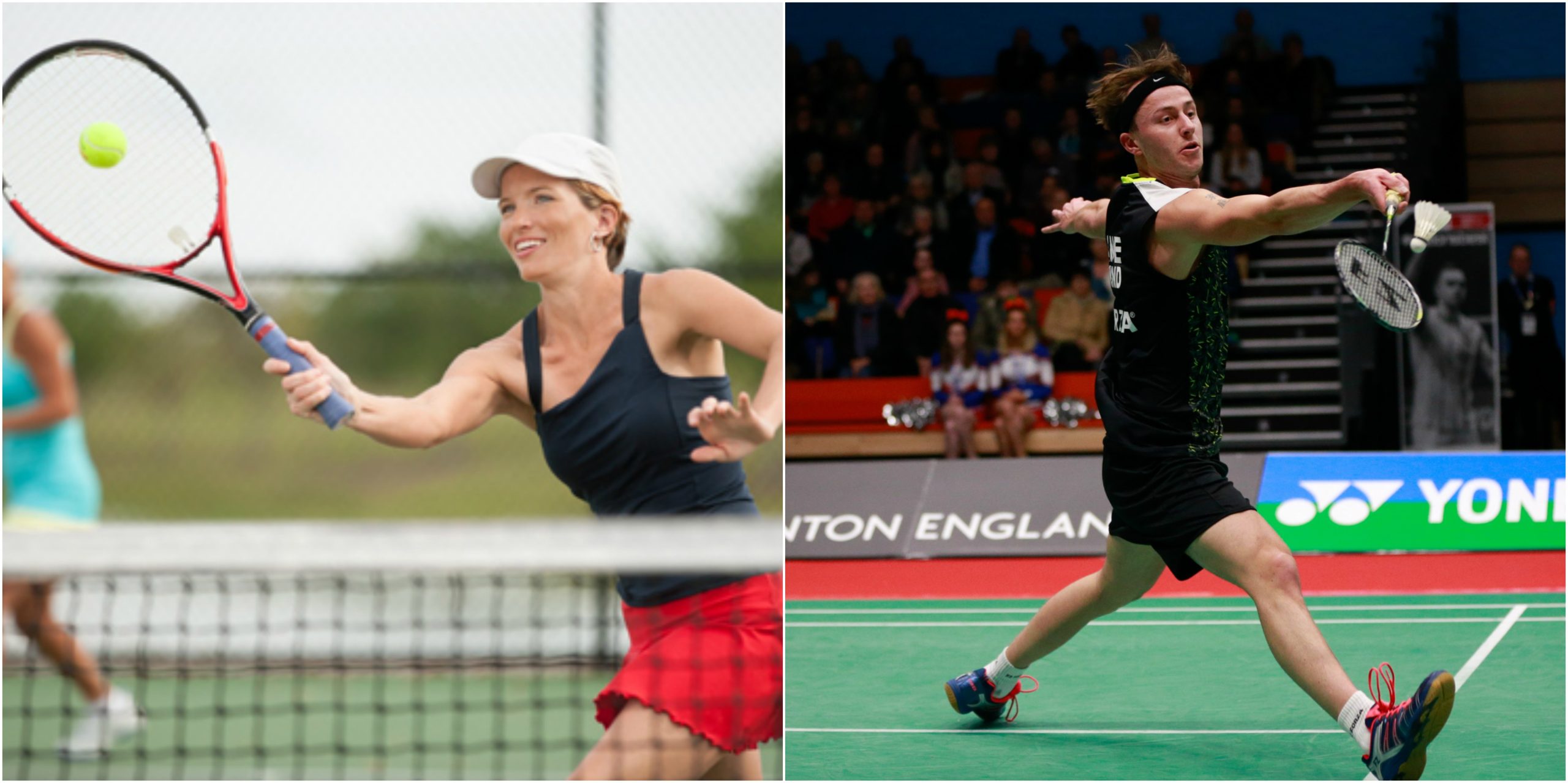
Tennis and badminton are two popular racket sports that demand excellent coordination, quick reactions and physical fitness. Both involve hitting an object over a net, reading an opponent’s movements and finding the right moment to attack. However, the way players move, generate power and control rallies is very different.
The debate over tennis vs badminton often comes down to one question: which sport requires more physical effort and skill? Badminton involves rapid movements and explosive reactions, while tennis demands strength, endurance and precise shot control. The answer depends on whether you compare speed, stamina, technique or overall match difficulty.
Tennis vs Badminton: Which Sport Is Harder?
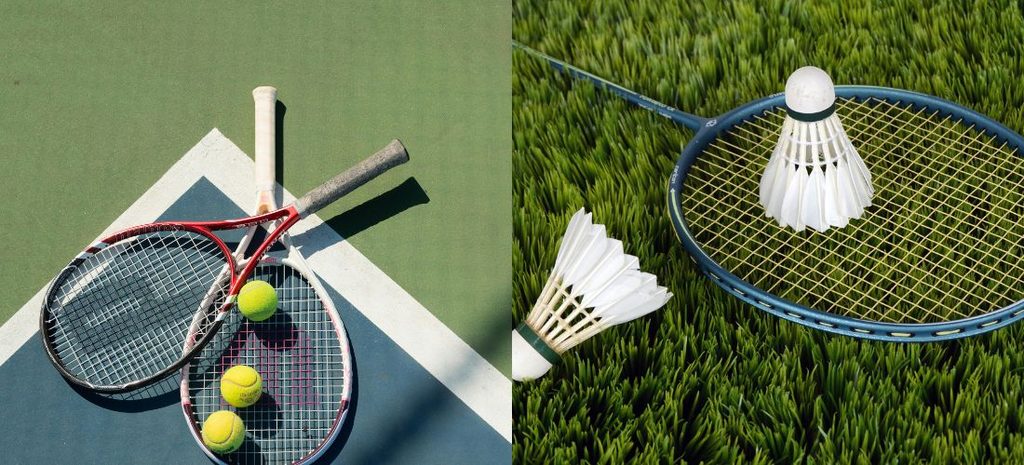
Source: Gallant Sports
Badminton is generally more demanding in terms of rapid movement, agility, reaction time and high intensity physical effort. Tennis, however, requires greater overall strength, powerful strokes and the ability to maintain performance during potentially longer matches. A 2023 systematic review of racket sports found particularly high heart rate and lactate responses in badminton, although tennis players showed higher average VO₂max in the studies reviewed. Therefore, neither sport is harder in every category.
Both sports test different athletic abilities. The following table highlights their main differences.
| Comparison Factor | Tennis | Badminton |
|---|---|---|
| Playing Equipment | Heavier racket and felt ball | Lightweight racket and shuttlecock |
| Court Size | Larger court | Smaller court |
| Movement | Running, sliding and directional changes | Quick steps, lunges and jumps |
| Physical Demand | Strength and sustained endurance | Explosive speed and repeated intense efforts |
| Reaction Time | Fast reactions to ball speed and spin | Very quick reactions to shuttle direction |
| Playing Style | Power, placement and spin | Speed, deception and precision |
| Stamina | Important during extended matches | Important during repeated high intensity rallies |
| Main Strength | Power and endurance | Agility and acceleration |
| Learning Difficulty | Challenging stroke mechanics and serving | Challenging timing, footwork and shot control |
1. Which Sport Requires More Physical Fitness?
Physical fitness is important in both sports, but their demands are different.
Badminton Requires More Explosive Movement
Badminton players constantly move forward, backward and sideways. They lunge towards the net, jump for smashes and quickly return to their base position. These movements require strong legs, balance, flexibility and fast acceleration.
Players also have very little time to react when an opponent hits a fast attacking shot. A rally can change direction several times within seconds. This makes badminton especially demanding on agility and cardiovascular fitness.
A scientific review published in 2023 found high heart rate and lactate responses among badminton players. The researchers linked these demands to the sport’s rapid accelerations, jumps and changes of direction.
Tennis Requires Strength and Sustained Endurance
Tennis players cover a larger court and must repeatedly chase the ball from different angles. Serving also requires coordinated power from the legs, core, shoulder and arm.
Long matches can place considerable pressure on a player’s physical endurance. Players need to maintain their movement, shot accuracy and concentration even after several hours of competition.
Verdict: Badminton has an advantage in explosive physical intensity, while tennis places considerable demands on strength and sustained endurance.
2. Which Sport Requires More Stamina?
Stamina is essential in both sports, but the pattern of effort differs.
Badminton often involves repeated bursts of intense activity. Players sprint towards the shuttle, recover their position and prepare for another attack. They need to repeat these efforts throughout a match without losing control or accuracy.
Tennis also involves short bursts of intense movement, followed by recovery periods between points. However, matches can continue for much longer, particularly in professional singles competitions. Players must manage their energy carefully and maintain their performance over extended periods.
A 2015 scientific review of badminton described typical rallies lasting around seven seconds, followed by approximately 15 seconds of rest in the match conditions examined. These figures illustrate the repeated effort pattern, although actual rally lengths vary by level and match.
Verdict: Badminton can feel more exhausting during a short period of continuous play. Tennis tests the ability to maintain physical performance over longer matches.
3. Which Sport Is Faster?
Source: NDTV News
Badminton is generally faster in terms of rapid exchanges and the speed at which players must react to changing shots.
A shuttlecock can travel extremely quickly after a smash, but it also slows down sharply because of air resistance. Players must judge its unusual flight path and move into position before it reaches the court.
Tennis involves fast serves, powerful groundstrokes and heavy topspin. Players must read the ball’s speed, bounce, direction and spin before choosing their return.
The difference is not simply about how fast the object travels. It is also about how quickly the player must recognise the shot and respond.
Verdict: Badminton usually demands faster immediate reactions, while tennis requires players to read a wider range of ball speeds, spins and bounces.
4. Which Sport Is More Difficult to Learn?
Both sports have a learning curve, but beginners face different challenges.
Learning Tennis
Tennis requires players to develop reliable forehands, backhands, volleys and serves. Correct grip, body rotation and timing are essential for controlling the ball.
The serve is particularly challenging because players must toss the ball, coordinate their movement and generate power while maintaining accuracy. Learning to control topspin and other types of spin also takes considerable practice.
Learning Badminton
Badminton beginners need to understand grip changes, footwork, serving and racket control. They must also learn how to perform clears, drops, drives, lifts and smashes.
Footwork is one of the biggest challenges. Reaching the shuttle is not enough. Players must arrive in a balanced position and recover quickly for the next shot.
Verdict: Tennis can be more difficult when learning consistent strokes and serves. Badminton can be harder when developing efficient footwork, timing and control at high speed.
5. Which Sport Requires More Strength?
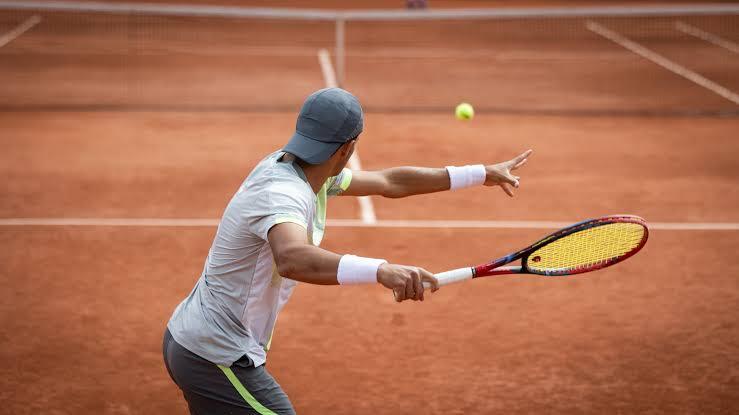
Source: Tignes
Tennis generally demands greater absolute strength because players use a heavier racket and hit a heavier ball. Powerful serves and groundstrokes require coordinated force from the legs, hips, core and upper body.
Badminton relies more heavily on racket head speed, timing and explosive movement. Players can generate powerful smashes with a relatively lightweight racket, but they still need strong legs, shoulders, forearms and core muscles.
Strength is important in both sports. The difference lies in how players use it.
Verdict: Tennis places greater emphasis on overall power and strength, while badminton depends heavily on explosive strength and speed.
6. Tennis Court vs Badminton Court: Which Is Bigger?
Tennis has a considerably larger playing court than badminton. This affects how players move, position themselves and cover space during rallies.
| Court Measurement | Tennis | Badminton |
|---|---|---|
| Singles Length | 23.77 metres | 13.40 metres |
| Singles Width | 8.23 metres | 5.18 metres |
| Doubles Width | 10.97 metres | 6.10 metres |
The measurements follow the official court dimensions published by the respective sports authorities.
Tennis players cover a larger area and often need to run longer distances to reach wide shots. Badminton players work within a smaller space, but the shuttle can travel quickly between different corners. They must change direction and reach difficult positions with very little time.
A smaller court does not automatically make badminton easier. The speed of movement and the absence of a bounce create a different physical challenge.
7. Tennis vs Badminton Rules and Scoring Differences
The rules and scoring systems also influence how each sport is played.
| Rule | Tennis | Badminton |
|---|---|---|
| Scoring System | 15, 30, 40 and game | Points counted from 0 to 21 |
| Match Format | Best of three or five sets, depending on competition | Best of three games |
| Equipment | Ball and racket | Shuttlecock and racket |
| Serve | Overhead serve is standard; an underarm serve is legal but rare | Underarm style service with the shuttle hit below the permitted height |
| Ball or Shuttle Bounce | Ball may bounce once before a return | Shuttle must be returned before touching the floor |
| Singles and Doubles | Both formats are played | Both formats are played |
In badminton, every rally gives one side a point. A game is normally won by the first side to reach 21 points with a two point lead. At 29 all, the side scoring the 30th point wins the game.
Tennis uses a different scoring structure. Players win points to complete games, games to complete sets and sets to win the match. The exact match format depends on the tournament.
8. Which Sport Is More Physically Demanding According to Research?
A systematic review published in Frontiers in Psychology in 2023 examined 27 research records covering racket sports, including tennis and badminton. It compared indicators such as heart rate, oxygen consumption, maximum oxygen consumption and blood lactate.
The review reported particularly high heart rate and lactate responses in badminton. It also found a higher recorded VO₂max among tennis players in the studies analysed.
These findings matter because physical difficulty cannot be measured through one fitness indicator. A high heart rate during intense rallies and the ability to maintain aerobic performance over a long match represent different athletic demands.
The researchers also noted that much of the available evidence came from elite male athletes. The results should not be treated as a universal ranking for every player or recreational match.
9. Which Sport Is Better for Beginners and Fitness?
The better choice depends on your fitness goals, interests and access to playing facilities.
Badminton can be a good option if you enjoy quick movements, fast rallies and activities that challenge agility. It is also popular for recreational doubles, where players share court coverage.
Tennis may suit people who enjoy powerful strokes, tactical rallies and developing strength alongside endurance. It offers several playing surfaces, including hard courts, clay and grass.
Both sports can improve cardiovascular fitness, coordination, balance and overall physical activity. Beginners should start with manageable sessions, learn proper technique and increase playing intensity gradually.
Tennis vs Badminton: Final Verdict
Badminton is generally harder when the focus is explosive movement, rapid reactions, agility and high intensity effort. Tennis is more demanding in terms of racket power, strength, court coverage and the ability to sustain performance during long matches.
There is no universal winner because each sport tests different physical and technical abilities. The harder sport for an individual also depends on experience, fitness, playing style and skill level. Both offer excellent physical challenges and reward consistent practice.
FAQs
Badminton is generally more demanding in explosive movement, agility and quick reactions. Tennis requires greater strength and sustained endurance, so the answer depends on which physical ability is being compared.
Both can burn a significant number of calories. The actual amount depends on playing intensity, match duration, body weight and singles or doubles format. Competitive badminton can involve particularly intense bursts of activity.
Tennis can be more tiring over a long match because players may compete for several hours. Badminton can feel more exhausting over a shorter period because of its repeated explosive movements and rapid rallies.
Neither sport is automatically easy. Tennis requires practice to master strokes and serving, while badminton requires good footwork, timing and racket control. Individual experience and coaching can make a major difference.
Badminton can help develop reaction time, coordination, agility and general racket awareness. These abilities may support tennis, but the two sports use different techniques, grips, strokes and movement patterns. Tennis players still need specific training to develop proper technique.