






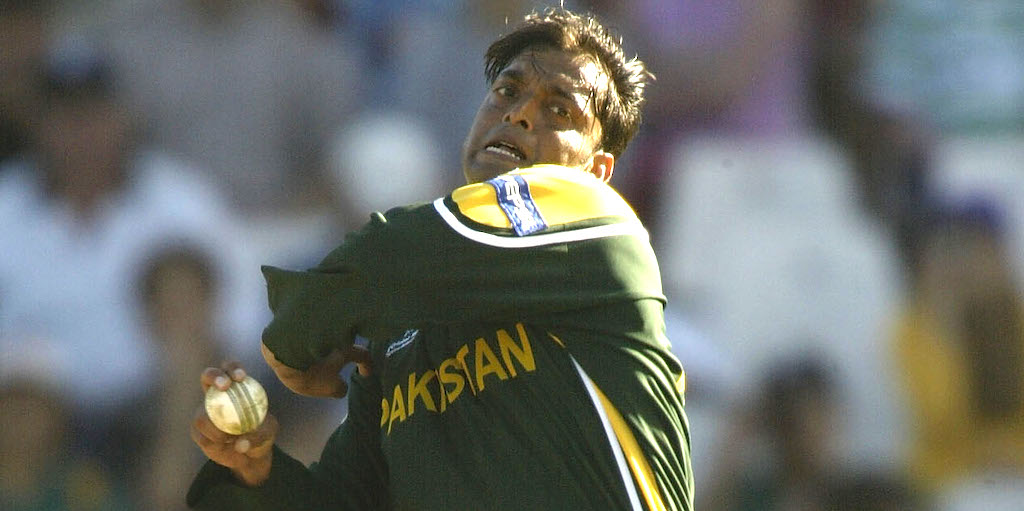
Fast bowling has always been one of cricket’s most exciting features. A delivery travelling at more than 150 km/h gives batters very little time to react. Only a few bowlers have managed to reach or cross the 160 km/h mark during their careers.
Pakistan’s Shoaib Akhtar holds the highest widely recognised electronically measured bowling speed in cricket. He recorded 161.3 km/h against England during the 2003 Cricket World Cup at Newlands, Cape Town. Known as the Rawalpindi Express, Akhtar became the first bowler to cross the 100 mph mark in an internationally recognised match.
Several other fast bowlers have come close to his record. Shaun Tait, Brett Lee, Jeff Thomson and Mitchell Starc are among the names associated with some of the quickest deliveries in cricket history.
Who Bowled the Fastest Ball in Cricket History?

Source: NDTV Sports
Shoaib Akhtar bowled the fastest widely recognised recorded delivery in cricket history, reaching 161.3 km/h (100.23 mph) against England on 22 February 2003 during the Cricket World Cup in South Africa. Shaun Tait and Brett Lee are also credited with deliveries above 160 km/h.
Top 10 Fastest Bowlers in Cricket History
The following table lists 10 bowlers associated with the fastest recorded or reported deliveries in cricket. Their speeds are based on commonly published figures, and measurements from different eras are not always directly comparable.
| Rank | Bowler | Country | Peak Speed | Opponent / Year |
|---|---|---|---|---|
| 1 | Shoaib Akhtar | Pakistan | 161.3 km/h (100.23 mph) | vs. England, 2003 |
| 2 | Shaun Tait | Australia | 161.1 km/h (100.14 mph) | vs. England, 2010 |
| 3 | Brett Lee | Australia | 161.1 km/h (100.14 mph) | vs. New Zealand, 2005 |
| 4 | Jeff Thomson | Australia | 160.6 km/h (99.80 mph) | vs. West Indies, 1975 |
| 5 | Mitchell Starc | Australia | 160.4 km/h (99.67 mph) | vs. New Zealand, 2015 |
| 6 | Andy Roberts | West Indies | 159.5 km/h (99.11 mph) | vs. Australia, 1975 |
| 7 | Fidel Edwards | West Indies | 157.7 km/h (97.99 mph) | vs. South Africa, 2003 |
| 8 | Lasith Malinga | Sri Lanka | 157.0 km/h (97.56 mph) | Reported career peak |
| 9 | Mitchell Johnson | Australia | 156.8 km/h (97.43 mph) | vs. England, 2013 |
| 10 | Mohammad Sami | Pakistan | 156.4 km/h (97.18 mph) | vs. Zimbabwe, 2003 |
Note: These are commonly reported peak speed figures, not an officially standardised ICC ranking. Some historical speeds and individual delivery details vary across sources. Older measurements are not directly comparable with modern electronic speed gun readings. Malinga is placed at number 8 because his reported 157.0 km/h career peak is higher than the documented figures listed below him, although it is not a confirmed match reading.
1. Shoaib Akhtar (161.3 km/h)
Shoaib Akhtar holds the most widely recognised recorded bowling speed in cricket. The former Pakistan fast bowler reached 161.3 km/h against England during the 2003 Cricket World Cup at Newlands in Cape Town.
The delivery came on 22 February 2003, with England batter Nick Knight facing the ball. Akhtar became the first bowler to cross the 100 mph barrier in an internationally recognised match. His aggressive run up, powerful action and exceptional pace earned him the nickname Rawalpindi Express.
He played 46 Test matches and 163 ODIs for Pakistan, taking 444 international wickets across formats. His fastest delivery remains one of the most famous moments in fast bowling history.
2. Shaun Tait (161.1 km/h)
Shaun Tait was one of Australia’s quickest fast bowlers. His unusual bowling action and explosive pace made him a difficult opponent, particularly in limited overs cricket.
Tait recorded a speed of 161.1 km/h against England at Lord’s in 2010. This delivery placed him among the very few bowlers to reach the 160 km/h mark.
He represented Australia in all three international formats and was part of the team that won the 2007 Cricket World Cup. Although injuries affected his career, his raw pace made him one of the most feared fast bowlers of his generation.
3. Brett Lee (161.1 km/h)

Source: mykhel
Brett Lee was another Australian fast bowler known for his speed, accuracy and ability to generate bounce. He regularly troubled batters with deliveries above 150 km/h.
He is commonly credited with a peak speed of 161.1 km/h against New Zealand in 2005. However, published records are not consistent about Lee’s exact fastest reading. The ICC’s account of the 2003 World Cup, for example, recorded his fastest delivery in that tournament at 160.7 km/h.
Lee played 76 Tests, 221 ODIs and 25 T20Is for Australia. He took 718 international wickets and played a major role in Australia’s successful cricket era.
4. Jeff Thomson (160.6 km/h)
Jeff Thomson was one of the fastest bowlers of the 1970s. His powerful shoulder action and unusual bowling technique generated tremendous pace, making him a difficult challenge for batters.
Thomson is commonly associated with a speed of 160.6 km/h against the West Indies in 1975. However, his peak speed comes from an era when modern electronic speed guns were not routinely used. Historical measurements and reports therefore need to be treated differently from modern match readings.
He formed a dangerous fast bowling partnership with Dennis Lillee for Australia. Thomson’s aggressive style and intimidating pace made him one of the most memorable fast bowlers in cricket history.
5. Mitchell Starc (160.4 km/h)
Mitchell Starc is one of the quickest left arm fast bowlers in modern cricket. His ability to bowl fast yorkers, swing the new ball and generate bounce has made him a key player for Australia.
Starc recorded a delivery of 160.4 km/h against New Zealand at the WACA Ground in Perth on 15 November 2015. The ball was directed at Ross Taylor during a Test match and is widely recognised as the fastest recorded delivery in Test cricket.
Starc has been an important part of Australia’s success in international cricket. He has also played a major role in the team’s World Cup campaigns, using his pace and swing to take wickets in important matches.
6. Andy Roberts (159.5 km/h)
Andy Roberts was a member of the legendary West Indies fast bowling generation. He was known for his pace, control and ability to use variations to deceive batters.
Roberts is commonly credited with a delivery of 159.5 km/h against Australia in 1975. Like other bowlers from that period, his reported speed comes from historical measurement methods rather than the modern electronic systems used in international cricket today.
He played 47 Test matches and 56 ODIs for the West Indies. Roberts took 202 Test wickets and was an important part of the side that dominated world cricket during the 1970s and early 1980s.
7. Fidel Edwards (157.7 km/h)
Fidel Edwards was a fast bowler from the West Indies who became known for his pace and aggressive bowling style. Despite his relatively short run up, he could generate considerable speed and trouble experienced batters.
Edwards is credited with reaching 157.7 km/h against South Africa in 2003. His ability to bowl quick deliveries helped him establish a place in the West Indies team.
He represented the West Indies in Test, ODI and T20I cricket. Edwards took 165 Test wickets and remained a recognised pace option for the team over several years.
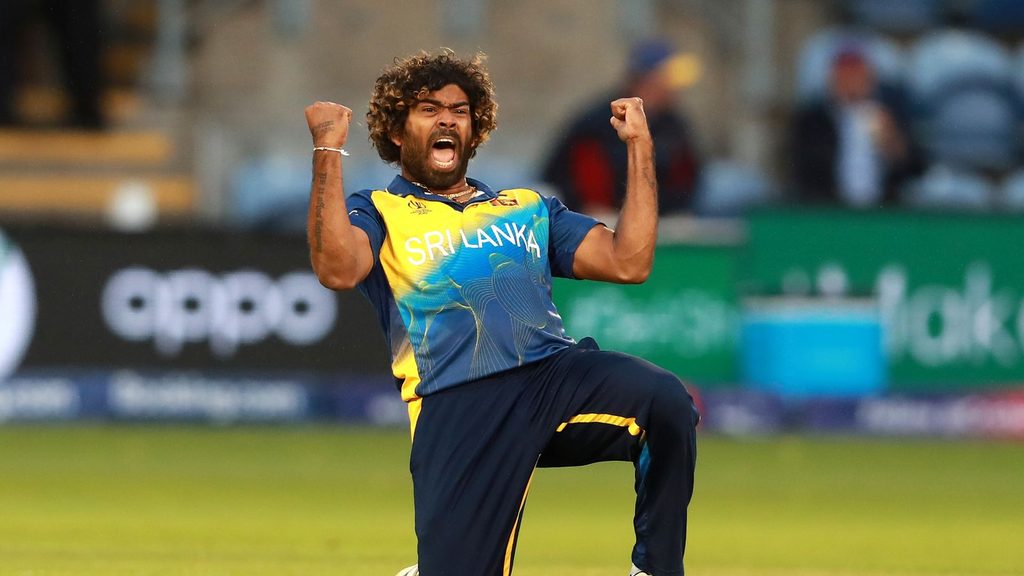
8. Lasith Malinga (157.0 km/h)
Source: Cricket World
Lasith Malinga was one of Sri Lanka’s most recognisable fast bowlers. His distinctive sling action, accurate yorkers and ability to deliver under pressure made him a major threat in limited overs cricket.
Malinga is often associated with a reported peak speed of around 157 km/h. However, this figure is a reported career peak rather than a clearly documented match reading. His position in this list reflects the commonly reported speed, but it should not be treated as a directly verified electronic record.
He played 30 Tests, 226 ODIs and 84 T20Is for Sri Lanka. Malinga took 546 international wickets and became one of the most successful death bowlers in cricket. He also played a key role in Sri Lanka’s 2014 ICC World T20 victory.
9. Mitchell Johnson (156.8 km/h)
Mitchell Johnson was one of Australia’s most intimidating left arm fast bowlers. His speed, steep bounce and ability to move the ball made him particularly dangerous when conditions favoured fast bowling.
Johnson is credited with reaching 156.8 km/h against England in 2013. His performances during the 2013 to 2014 Ashes series were especially memorable, as he repeatedly troubled England’s batting line up.
He played 73 Tests, 153 ODIs and 30 T20Is for Australia. Johnson finished his international career with 590 wickets across formats and was named ICC Cricketer of the Year in 2014.
10. Mohammad Sami (156.4 km/h)
Mohammad Sami was a Pakistan fast bowler known for his natural pace and ability to produce quick deliveries. He could regularly bowl at high speeds and was considered one of the quickest Pakistani bowlers of his generation.
Sami is credited with recording 156.4 km/h against Zimbabwe in 2003. His pace made him an important bowling option for Pakistan, particularly in the early stages of his international career.
He represented Pakistan in Tests, ODIs and T20Is. Sami took 85 Test wickets and 121 ODI wickets, contributing to Pakistan’s fast bowling attack during his career.
Why Is Shoaib Akhtar’s 161.3 km/h Delivery So Famous?
Shoaib Akhtar’s 161.3 km/h delivery is famous because it crossed the 100 mph barrier and remains the highest widely recognised electronically measured bowling speed.
He achieved this milestone against England during the 2003 Cricket World Cup. The match took place at Newlands in Cape Town, and Nick Knight was the batter facing the delivery.
The record became a major moment in cricket because very few bowlers had reached such speeds. Even after the emergence of several talented fast bowlers, no widely accepted electronic match reading has surpassed Akhtar’s 161.3 km/h mark.
Is 161.3 km/h an Official ICC World Record?
The ICC does not maintain a standardised official world record for the fastest delivery in cricket. The main issue is the lack of uniformity between speed guns used at different venues and during different periods.
Guinness World Records recognises Shoaib Akhtar’s 161.3 km/h delivery as the highest electronically measured speed for a ball bowled by a male cricketer. However, it also notes the limitations of comparing speed gun readings across different systems.
A notable example of this measurement problem occurred in October 2025 during an Australia versus India ODI. A faulty speed gun reading on a Mitchell Starc delivery to Rohit Sharma briefly sparked claims that Akhtar’s record had been broken. The reading was quickly dismissed, and the incident showed why individual speed gun results need careful verification.
This distinction matters when comparing modern bowlers with players such as Jeff Thomson and Andy Roberts. Their reported speeds come from older measurement methods, so they cannot be compared with complete certainty.
Which Fast Bowlers Have Crossed 160 km/h?
Only a small group of bowlers have been credited with deliveries reaching or exceeding 160 km/h.
The most commonly cited names include:
- Shoaib Akhtar: Recorded 161.3 km/h against England in 2003.
- Shaun Tait: Reached 161.1 km/h against England in 2010.
- Brett Lee: Commonly credited with a peak speed of 161.1 km/h against New Zealand in 2005, although published figures differ.
- Jeff Thomson: Reportedly reached 160.6 km/h during the 1970s, using historical measurement methods.
- Mitchell Starc: Recorded 160.4 km/h against New Zealand in a 2015 Test match.
These bowlers are remembered for their exceptional pace and ability to challenge batters with deliveries that leave very little time for a response.
What Makes a Fast Bowler Deliver the Ball at 160 km/h?
Bowling at 160 km/h requires a combination of physical strength, technique, coordination and timing. A fast bowler cannot generate this speed through arm strength alone.
Several factors contribute to extreme bowling pace:
- Run Up and Momentum: A controlled and powerful run up helps bowlers build momentum before delivering the ball.
- Bowling Action: A coordinated bowling action transfers energy from the legs and torso through the shoulder and arm.
- Physical Strength: Strong legs, shoulders and core muscles help bowlers generate and maintain speed.
- Wrist Position: A stable wrist position helps bowlers release the ball cleanly and maintain control over their deliveries.
- Fitness and Conditioning: Fast bowling places considerable pressure on the body. Strength training, flexibility and recovery are important for maintaining pace throughout a match.
Conclusion
Shoaib Akhtar remains the bowler associated with the fastest widely recognised recorded delivery in cricket history, reaching 161.3 km/h against England during the 2003 Cricket World Cup. Shaun Tait, Brett Lee, Jeff Thomson and Mitchell Starc are also remembered for their extraordinary pace.
However, bowling speed records should be viewed with some caution because measurement technology has changed over time. Reported career peaks and historical estimates also need to be distinguished from verified match readings. Despite these differences, these bowlers have set remarkable benchmarks and remain important names in the history of fast bowling.
FAQs
Shoaib Akhtar of Pakistan bowled the fastest widely recognised recorded delivery at 161.3 km/h against England during the 2003 Cricket World Cup.
Shoaib Akhtar is widely recognised as the first bowler to cross the 100 mph mark in an internationally recognised match, with a recorded speed of 161.3 km/h.
Shaun Tait and Brett Lee are among Australia’s fastest bowlers. Both are commonly credited with peak speeds of around 161 km/h.
Mitchell Starc recorded a speed of 160.4 km/h against New Zealand during a Test match at the WACA Ground in Perth on 15 November 2015.
No. The ICC does not maintain a standardised official world record for bowling speed because speed gun technology and measurement methods have varied across venues and periods.